


Come Away, My Beloved: The wedding between Jesus and His Bride and the artist behind it all
There is a melody running through Scripture, soft at first, like a tune you recognize before you can name it. It is the love song of a Bridegroom and His Bride, a story God has been telling from Genesis to Revelation. And the more you sit with it, the more you notice that this melody is not just in the words. It is in the seasons. It is in the rhythms of Israel’s feasts. It is in the timing of harvests and the blossoming of spring. It is even in the way God paints His story across the pages of Scripture like an artist layering color upon color until the fuller picture emerges.
One of the most tender brushstrokes in this masterpiece appears in the Song of Solomon. The Bridegroom calls to the bride with words that feel like a warm breeze after a long winter:
“Arise, my love, my fair one, and come away. For behold, the winter is past, the rain is over and gone.
The flowers appear on the earth;
the time of singing has come…”

It is the only place in Scripture where the Bridegroom invites the bride to “come away” in a setting tied specifically to spring. The imagery is unmistakable. Winter has ended. The cold, dark winter has passed. The earth is waking up once again. The turtledove returns. Everything about the scene speaks of renewal, awakening, and the nearness of love.
It is no wonder believers have long seen in this passage a poetic echo of the rapture. The language of “come away” harmonizes with Paul’s description of the upward call in 1 Thessalonians and the “come up here” in Revelation. It is not a date or a prediction. It is a pattern, a picture, a whisper of the Bridegroom’s voice.
And then there is Ruth, the narrative counterpart to the Song’s poetry. Ruth is a Gentile woman with no inheritance, no covering, and no future. Yet she clings to Naomi, follows her to Bethlehem, and places herself under the wings of Boaz, the kinsman-redeemer. Boaz steps into the story with strength, honor, and compassion, redeeming Ruth and bringing her into covenant love.
But the timing of Ruth’s story is where the prophetic beauty really begins to shine. Scripture tells us that Ruth arrives in Bethlehem “at the beginning of the barley harvest.” That detail is not incidental. Barley is the first crop to ripen in Israel. It is the first harvest, the first separation, the first gathering of grain from the fields. Barley ripens early, around March and April, right at Passover and the Feast of Firstfruits — the season of resurrection.
And Ruth is there for it.
She is gathered in the first harvest, the early harvest, the one that comes before the wheat. She is the first one pulled out of obscurity, the first one brought under the Redeemer’s covering, the first one separated from the rest of the field. Her story unfolds in the season of firstfruits, the season of new beginnings, the season that mirrors the rapture of the Church, when the Bride is gathered first, ahead of the later harvest.
Because after the barley comes the wheat.
Wheat ripens later, around May and June, during the time of Pentecost. Wheat is harvested differently. Wheat is beaten, crushed, and threshed to separate it from the chaff. It is a harder, harsher process. And prophetically, many see in the wheat harvest a picture of those who come to Christ after the rapture; those who will give their lives to Him during the tribulation, refined through pressure and persecution.
Barley is lifted. Wheat is threshed.
Barley is gathered gently. Wheat is separated through shaking.
Barley is the first harvest. Wheat is the later harvest.
And Ruth, the picture of the Church, is found in the barley.
She is the first one redeemed. The first one covered. The first one brought near. The first one separated from the field.
Her story is a springtime story, a first fruits story, a rapture story. It is the Bride being gathered to the Bridegroom before the rest of the harvest comes in. It is the early harvest of souls, the ones who respond to the Redeemer’s voice before the shaking begins.
Ruth is not just a love story. She is a prophecy in motion. A picture of the Bride being gathered early. A whisper of the rapture hidden in the fields of Bethlehem, Jesus’ birthplace.
But Scripture doesn’t stop with spring. It also draws our attention to the autumn harvest season, especially the Feast of Tabernacles. If spring is the season of awakening, Tabernacles is the season of ingathering. It is the final harvest, the joyful celebration when all God’s people dwell with Him in remembrance of His faithfulness. Many see in Tabernacles a picture of the Second Coming of Christ, when He returns after the tribulation, gathers the nations and establishes His kingdom on earth.
And the timing fits the pattern perfectly.
Spring is the first harvest, the barley — the rapture of the Bride. Autumn is the final harvest, the ingathering, the return of the King.

The Bride is taken first. The world is gathered later. The rapture is the early harvest. The Second Coming is the autumn harvest.
The same God who calls “Come away” in the spring returns in glory in the fall. In, Matthew 24:31, Jesus says: “And He will send His angels with a great sound of a trumpet, and they will gather His elect from the four winds, from one end of heaven to the other.”
This is an indicator that a segment of His bride will be in ‘one end of the heaven’. If there is a question of a pre-second coming/end of tribulation rapture, this should answer it. Who would they need to call from one end of heaven to the other if it’s not a group who were already removed from the Earth?
Tucked between these two seasons is Purim, a celebration of deliverance that arrives just as winter is loosening its grip. Purim is not a feast of the Law, but it is a feast of survival, reversal, and joy. It marks the moment when God’s people were rescued from annihilation, when mourning turned to dancing, and when the unseen hand of God moved powerfully behind the scenes. Purim arrives just before the first blossoms of spring, almost like a prelude to the Bridegroom’s call in the Song of Solomon. It is a reminder that God delivers His people before the pouring out of His wrath begins. A reminder that the Bride is protected before she is called away. A reminder that God’s timing is always perfect.
And this is where the beauty of God’s artistry becomes impossible to ignore. When you look at any single verse, any single feast, any single season, it may feel like a small brushstroke. A splash of color. A detail that seems lovely but isolated. But the more you look, the more you focus on the colors, the shadows, the highlights, the more you begin to see the fuller picture.
God is the ultimate Artist, and Scripture is His canvas. Every feast, every harvest, every season, every story is a stroke of His brush. Ruth gleaning in the fields. Esther standing before the king.
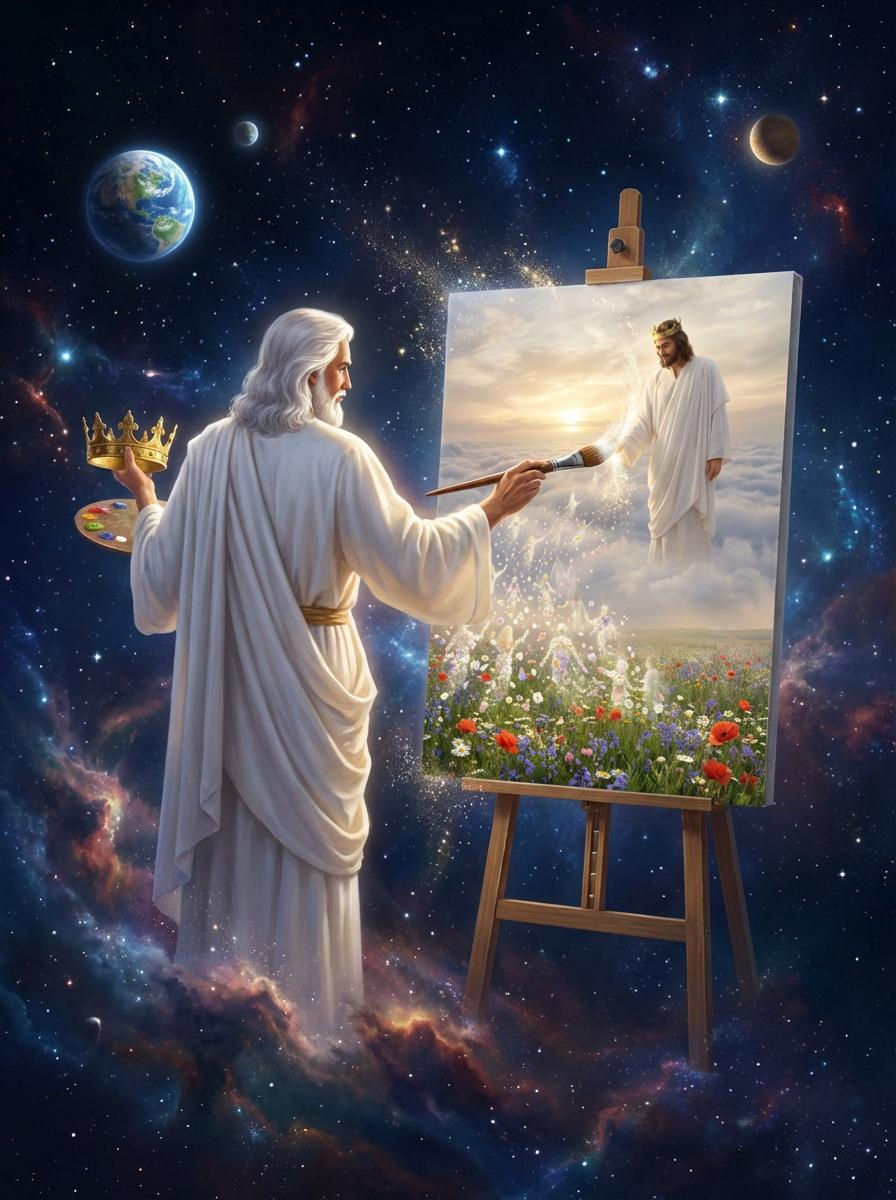
The Bridegroom calling in the spring. The King returning in the autumn. None of these are random. They are pieces of a masterpiece that only becomes clearer the longer you look at it.
And when you step back far enough, you begin to see something breathtaking: the rapture, the Bridegroom taking His Bride before wrath, and the Second Coming where our King returns after wrath. This is all woven through the entire Bible.
Enoch is taken before the flood. Noah is lifted above the judgment. Israel is carried out of Egypt “on eagles’ wings” before the plagues fall. Isaiah hears God say, “Enter your chambers until the indignation is past.” Jesus calls Himself the Bridegroom and tells parables of sudden gathering.
Paul speaks of being “caught up” and “gathered to Him.” John hears a voice like a trumpet saying, “Come up here,” before the judgments unfold. Revelation ends with a wedding, the Bride made ready, and then the King returning in glory to reign.
It is the same story in different colors. The same melody in different keys. The same Artist painting the same truth across every book.
The more you meditate on the snippets, the barley harvest, the wheat harvest, the spring blossoms, the autumn ingathering, the bridal language, the deliverance before wrath, the more the grand design comes into view. And the design is always the same: a Bridegroom pursuing His Bride, protecting her, calling her, and finally gathering her to Himself.
Maybe that is why so many hearts feel stirred right now. Maybe that is why the longing feels deeper, the spiritual atmosphere heavier, the sense of anticipation stronger. It is not about setting dates or predicting moments. Scripture tells us to watch the season, not the calendar. But there is something about spring that naturally draws our hearts back to these passages.
The earth wakes up. The blossoms return. The air feels lighter. And the words “come away” seem to carry a little more weight.
We cannot say with certainty that this spring is the moment the Bridegroom calls. But we can say that the imagery of spring has always been tied to awakening, redemption, and return.
Ruth’s story unfolds in the spring harvest. Purim celebrates deliverance just before the first blossoms appear. The Church was born at Pentecost in late spring. And the Song of Solomon places the Bridegroom’s invitation in a world bursting with new life.
And through it all, the Artist keeps painting. Layer upon layer. Color upon color. Story upon story. Until the Bride can finally see what He has been showing her all along.
The Spirit and the Bride still say, “Come.” And the Bridegroom still whispers, “Arise, my love, and come away.”


Comments